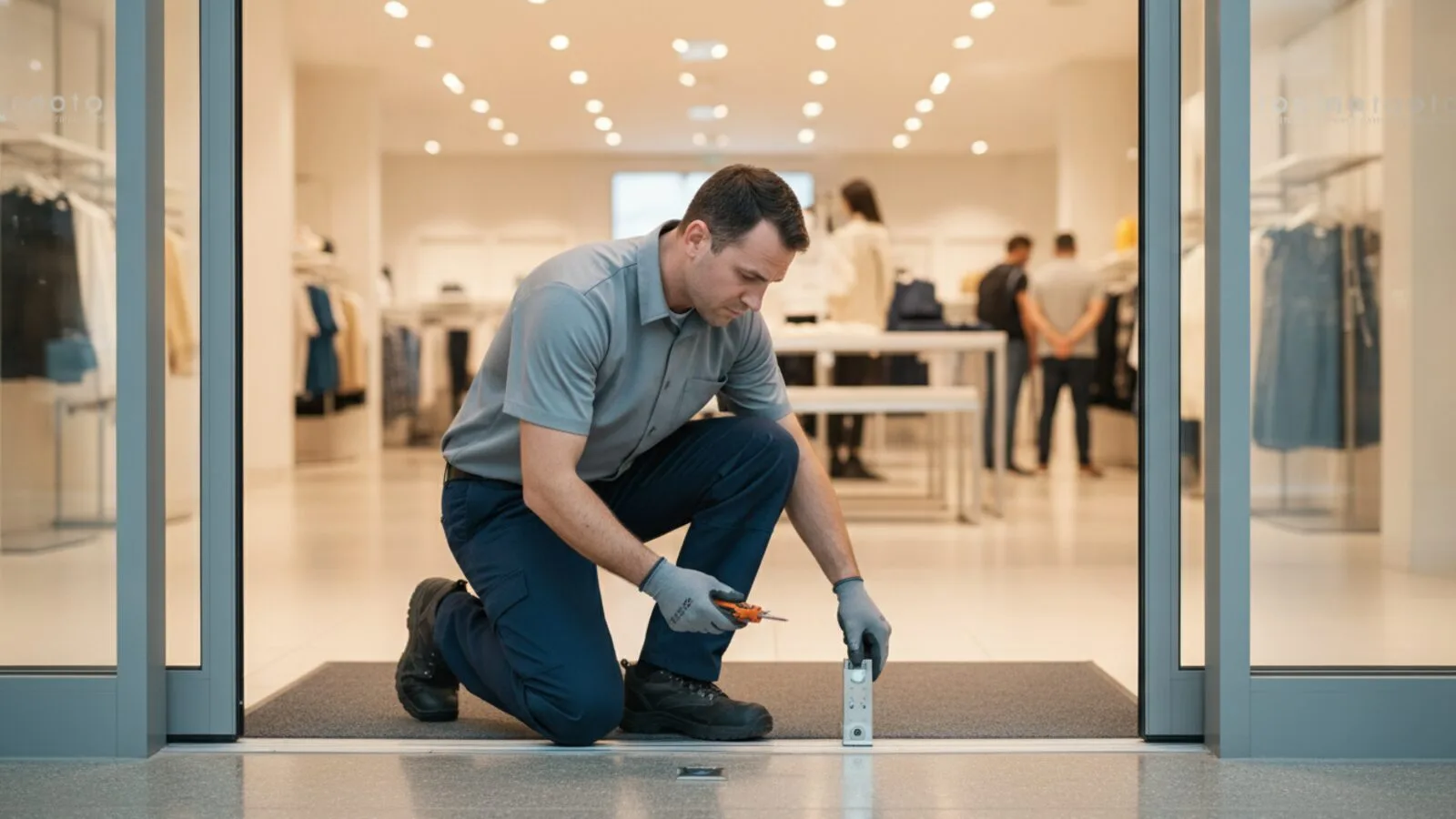
Automatic Door Not Opening? Common Causes and Troubleshooting Steps
When an automatic door stops opening, it usually happens at the worst possible moment — the morning rush, a delivery, or a customer with their hands full. The good news is that most "door won't open" calls come down to a short list of causes, and a few of them you can safely check yourself before anyone picks up a tool. This guide walks through the common culprits, the steps you can take on your own, and the clear signs that it is time to bring in a technician.
First, make the area safe
Before you investigate anything, secure the doorway. A door that is stuck part-way open, drifting, or behaving unpredictably is a pinch and trip hazard. If the door is jammed in a position that blocks an accessible route or a fire exit, rope it off or post someone there, and switch the operator to manual or "off" if your unit has an accessible mode switch. Never force a powered door by hand while it is still energised — you can damage the gearbox or injure yourself. If the door is an emergency egress point and it is stuck closed, treat it as urgent and call for emergency automatic door repair right away.
The most common reasons an automatic door will not open
1. Power or a tripped breaker. It sounds obvious, but a surprising share of "dead door" calls are simply a tripped breaker, a switched-off isolator, or a unit that was knocked into the "off" position on its mode switch. Confirm the operator has power and that the program switch is set to "automatic" or "open," not "manual" or "exit only."
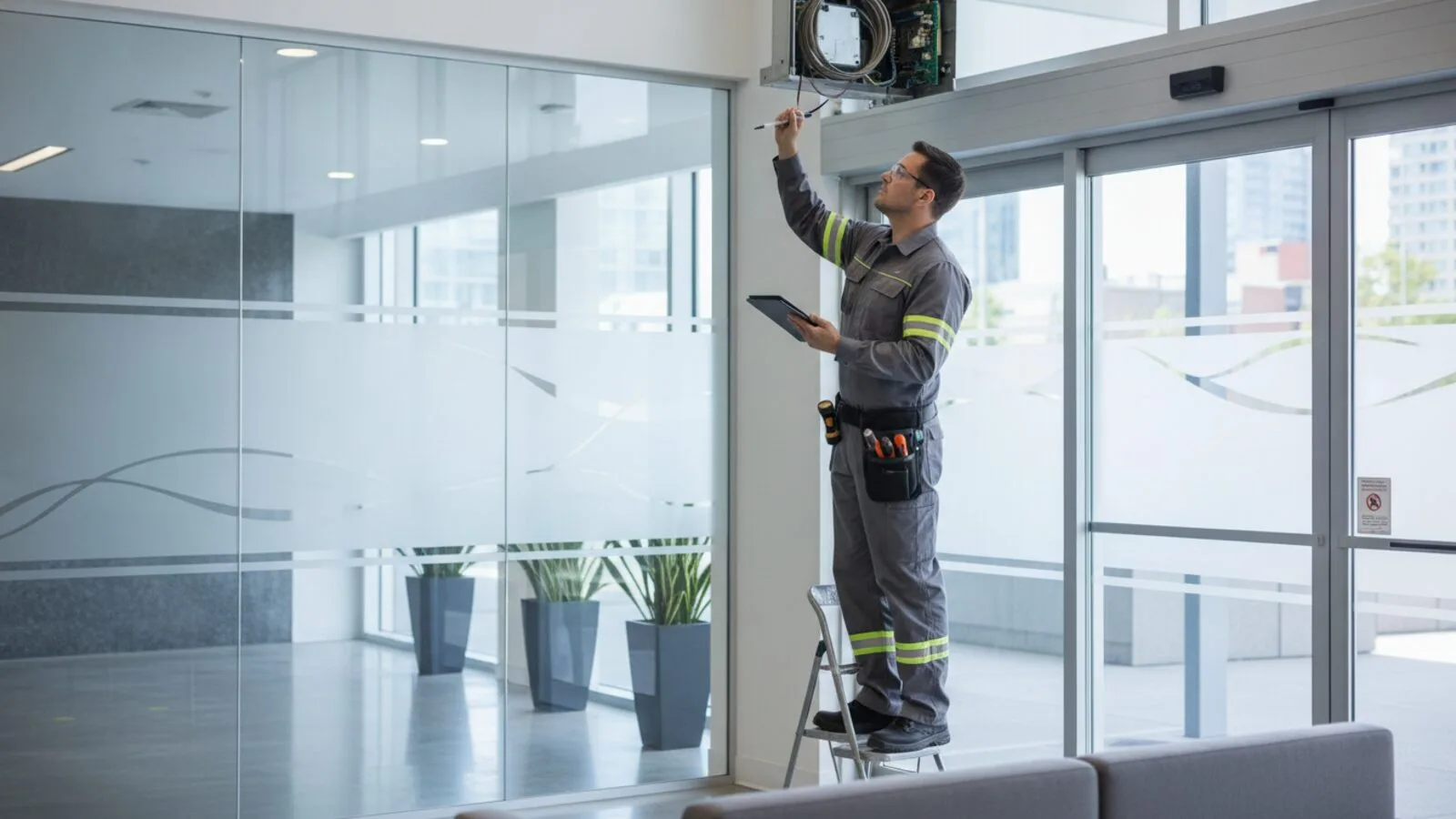
2. Dirty, blocked or misaligned sensors. Motion and presence sensors are the number-one functional cause. A sensor head caked in dust, fogged by condensation, knocked out of alignment, or blocked by a sign, plant or floor mat will stop reading approaching traffic. Sensors can also drift out of calibration over time. If your door ignores people walking up but still works when nudged, suspect the sensors first. Persistent faults usually need automatic door sensor repair and recalibration.
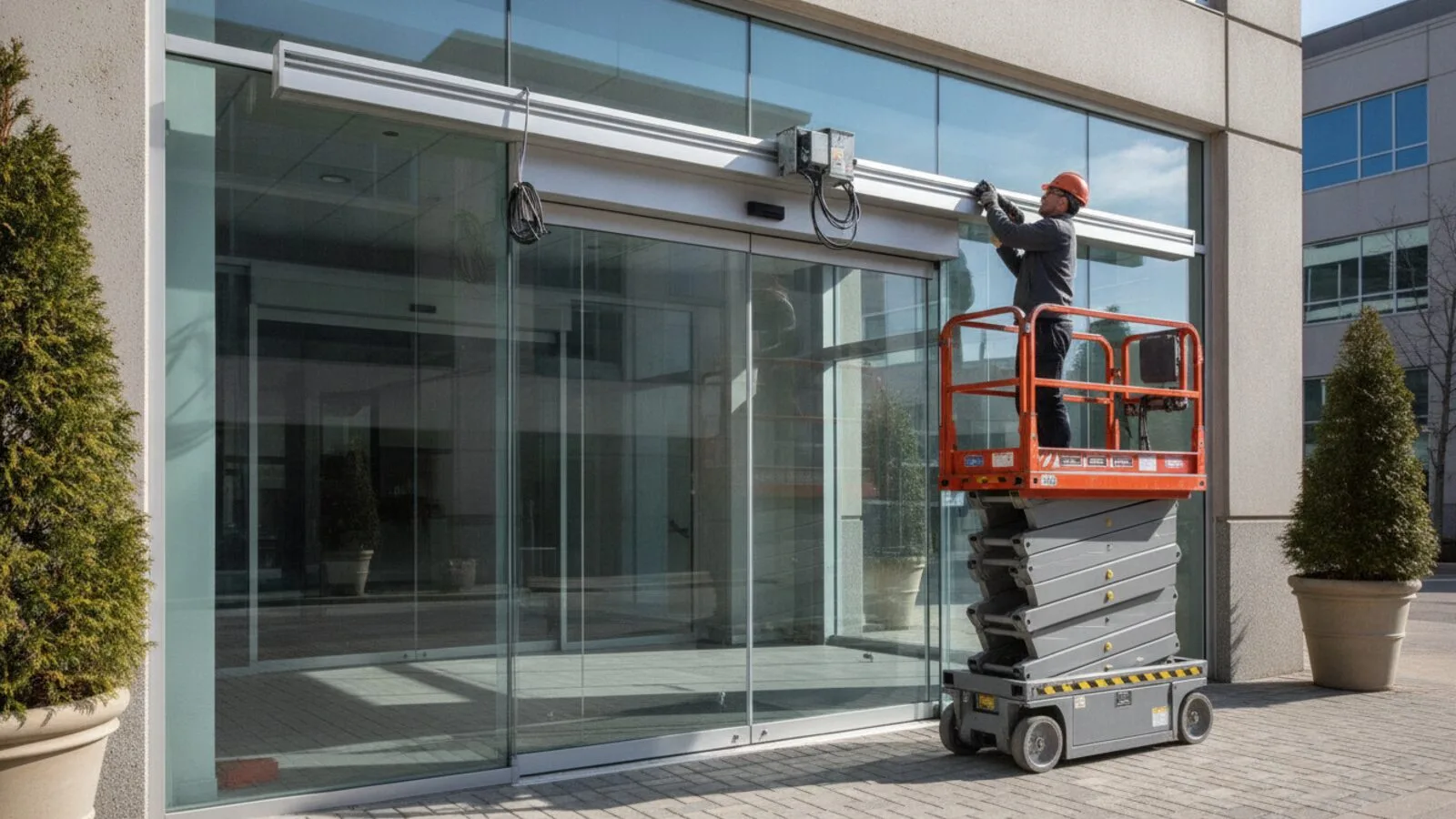
3. Tracks, rollers and debris (sliding doors). On sliding units, grit, salt, packaging strapping or a small stone in the track can stall the door or make it bind. Worn rollers and carriers cause the panel to drag, judder, or stop short. This is one of the most common issues we see on high-traffic retail entrances — and a frequent reason for automatic sliding door repair.
4. A failed control board or power supply. The control board is the brain of the operator. After a power surge, water ingress, or simple age, a board can fail or behave erratically — the door may do nothing, open and stop, or cycle on its own. Board faults are not a DIY fix and call for control board diagnosis and repair.
5. Activation devices (push plates and switches). On accessible entrances, a dead wave-to-open plate, wired push button, or wireless transmitter will stop the door responding even though the operator itself is fine. A flat transmitter battery or a loose wire is a common, easily-missed cause.
6. Locking or "night" mode. Many doors are on a timer or an access-control lock. A door that simply will not open during business hours may be stuck in a locked or after-hours mode because of a timer fault or a controller glitch.
Step-by-step troubleshooting you can do safely
- Check the mode switch. Find the operator's program switch (often a small key-switch or rocker near the door) and confirm it is set to automatic. A switch bumped to "off" or "manual" is the single most common false alarm.
- Confirm power. Look for a tripped breaker at the panel and reset it once. If it trips again immediately, stop — that is an electrical fault for a professional.
- Clear and wipe the sensors. Gently wipe sensor heads and photo-eyes with a soft, dry cloth, and remove any signage, mats, displays or plants inside their field of view.
- Inspect the threshold and track. On sliders, look for visible debris in the track and clear it carefully. Do not stick fingers or tools into a powered door.
- Test the activation device. Press the push plate or button. No response and no click usually points to the activation device or its wiring/battery rather than the operator.
- Power-cycle once. If your unit has a clearly marked on/off, switching it off for thirty seconds and back on can clear a momentary control glitch. If the fault returns, it needs diagnosis.
If a quick clean and a switch check bring the door back to life, keep an eye on it — a sensor that needed wiping today often needs proper recalibration soon, and a one-off reset that fixes a board glitch tends to come back.
Signs the problem needs a technician
Call a professional when you see any of the following: the door opens and then reverses or stops part-way; it makes grinding, scraping or clicking noises; the breaker trips repeatedly; the door drifts, hunts, or cycles on its own; the panel is visibly off its track; or the safety sensors are not stopping the door on an obstruction. These point to worn mechanical parts, an electrical fault, or a control-board problem — and a door that does not reverse on an obstruction is a safety issue that should be taken out of automatic operation until it is fixed.
Our technicians handle these diagnoses every day across Toronto and the GTA, with same-day automatic door repair and a 24/7 line for doors that cannot wait. If you are weighing a repeat repair against a new unit, our guide on repair vs. replacement can help, and staying on a regular service schedule prevents most surprise breakdowns in the first place. When you are ready, request a quote or book a visit.
Frequently asked questions
Why does my automatic door open but not close (or close but not open)?
A door that opens but will not close is often a safety sensor seeing a phantom obstruction (dirt, a mat, or a misaligned photo-eye), while a door that will not open usually points to motion-sensor, activation, power or control-board issues. If cleaning the sensors and checking the mode switch does not resolve it, have the sensors recalibrated and the operator diagnosed.
Is it safe to keep using an automatic door that is acting up?
If the door fails to reverse on an obstruction, drifts unpredictably, or moves with excessive force, switch it out of automatic mode and have it inspected. Those are safety faults. A door that is simply slow or occasionally hesitates can usually stay in service until a technician arrives, but should still be looked at promptly.
How fast can you get to a stuck door in Toronto or the GTA?
We offer same-day service across Toronto and the surrounding municipalities, with a 24/7 emergency line for doors that are stuck open, stuck closed, or unsafe. Call us and describe what the door is doing and we will book the soonest available visit.
Door trouble, or planning an upgrade?
Talk to a technician about same-day service and upfront quotes across Toronto & the Greater Toronto Area.