How Often Should Commercial Automatic Doors Be Serviced?
Automatic doors are one of the hardest-working pieces of equipment in any commercial building — a busy retail entrance can cycle thousands of times a day. Like any machine under that kind of load, they need regular attention to stay safe, compliant and reliable. The question we hear most often is simply: how often is "regular"? The industry gives a clear answer, and it has two parts.
The short answer: daily checks plus an annual professional inspection
The recognised safety standard for power-operated pedestrian doors, ANSI/BHMA A156.10, strongly recommends that every automatic pedestrian door be inspected at least once a year by an inspector certified by AAADM (the American Association of Automatic Door Manufacturers). On top of that annual professional inspection, the building owner or operator is expected to perform a daily safety check using the procedure on the AAADM daily safety inspection label affixed to the door. So the baseline for any commercial door is: a quick daily walk-through by your own staff, and a thorough yearly inspection by a certified technician. Our automatic door safety inspection follows exactly this standard.
High-traffic doors need more than the minimum
"At least annually" is a floor, not a ceiling. The right frequency depends on how hard the door works and where it lives. A quiet office side-entrance may be fine on an annual inspection, but a grocery or pharmacy entrance cycling thousands of times daily, a hospital door, or a unit exposed to road salt and winter grit will wear far faster. For those, we typically recommend professional preventive maintenance two to four times a year. As a rough guide:
- Low traffic (small office, low-use side door): annual inspection.
- Moderate traffic (clinics, mid-size retail, schools): semi-annual service.
- High traffic / harsh conditions (supermarkets, hospitals, transit, exterior doors in winter): quarterly service.
Your daily safety check (takes about a minute)
The owner's daily check is quick and requires no tools. Walking up to the door at normal speed, confirm that it opens smoothly and fully, pauses, and closes without slamming. Check that it reverses or stops if something is in the way, that the safety sensors hold the door open when someone stands in the threshold, and that all signage and decals are present and legible. If anything looks or sounds off — grinding, hesitation, a door that no longer reverses on an obstruction — take it out of automatic operation and book a technician. Many small faults caught at this stage are simple fixes; ignored, they become breakdowns. Our troubleshooting guide covers what those early warning signs mean.
What a professional service visit covers
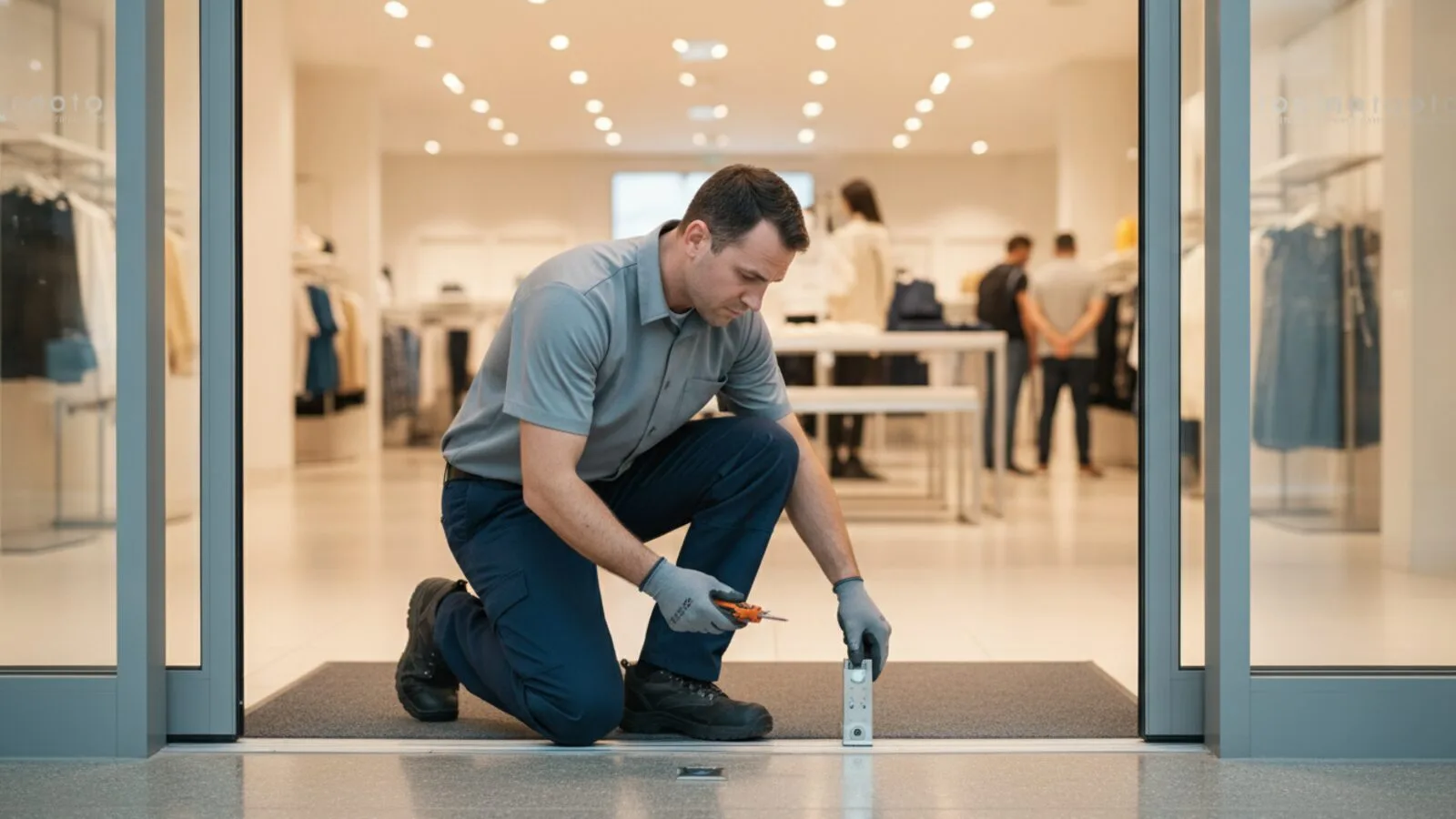
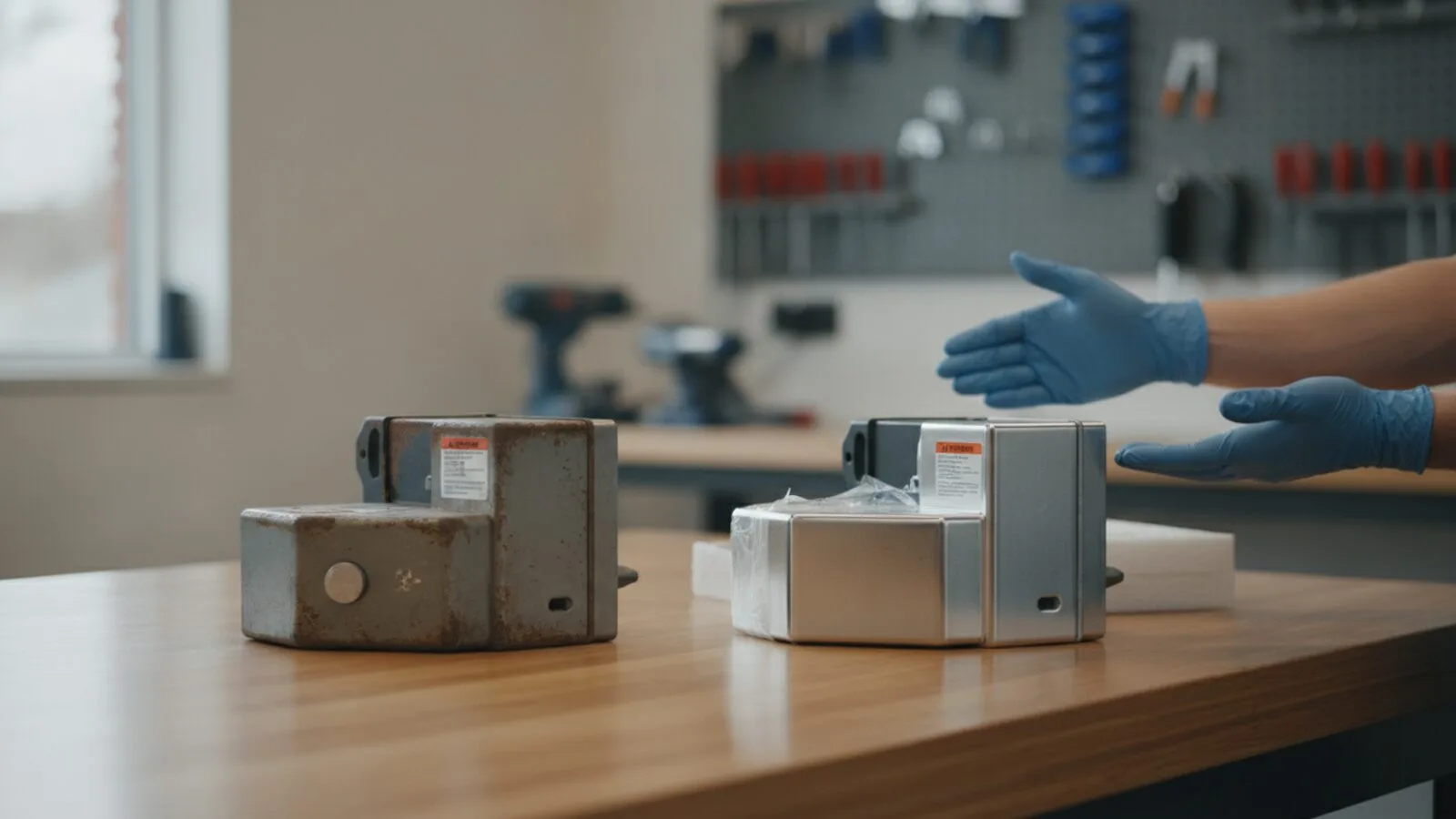
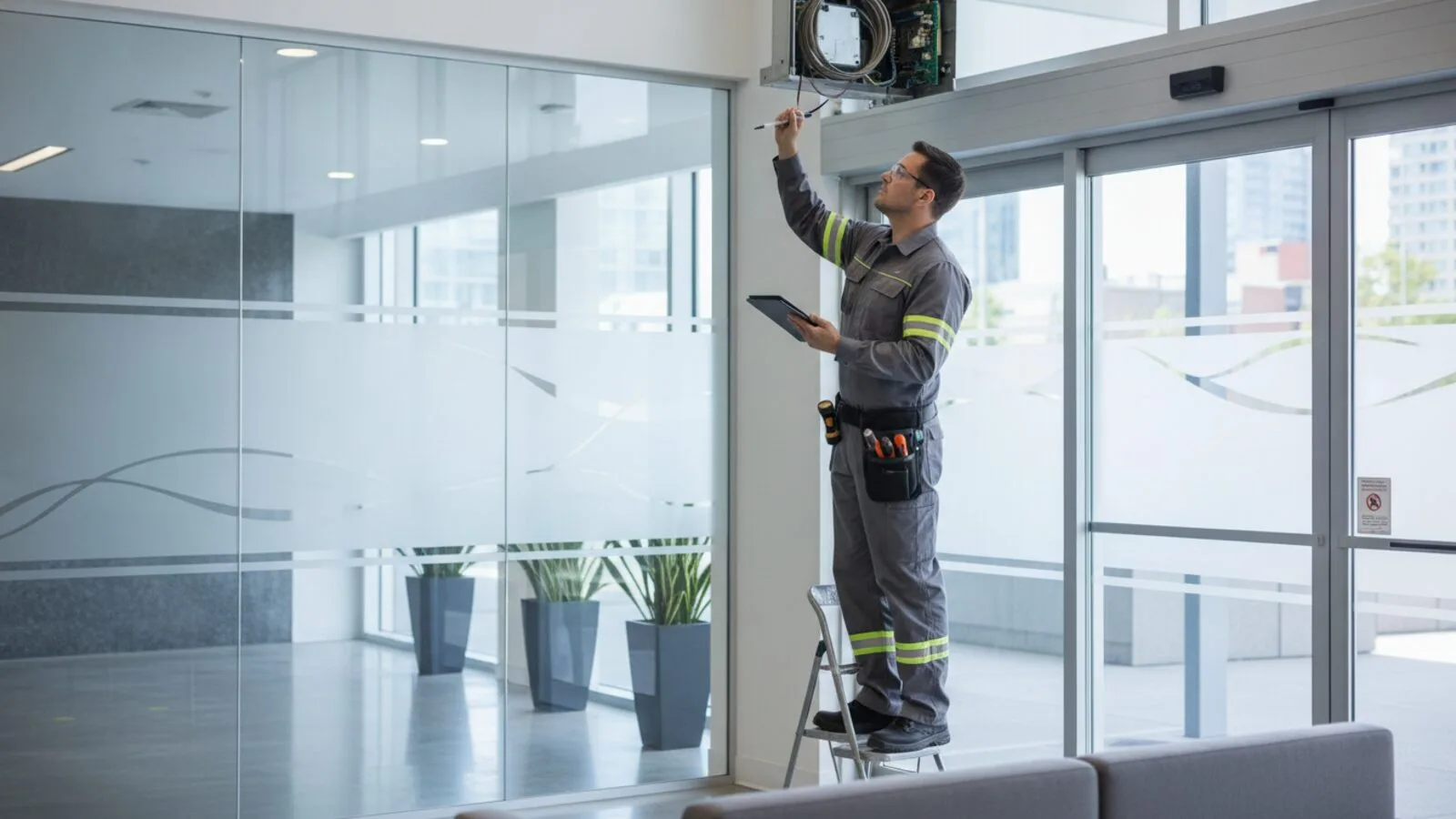
A proper scheduled visit goes well beyond a glance. A technician checks and adjusts the operator's opening and closing force and speed, tests every safety sensor and the obstruction-reversal behaviour, inspects and lubricates rollers, tracks, arms and hinges, examines belts and gearboxes for wear, verifies activation devices and push plates, checks the control board and wiring, and confirms the door still meets the safety standard. They will also flag parts that are wearing so you can plan a repair before the door fails. That is the difference between scheduled maintenance and an emergency call-out.
Why a schedule pays for itself
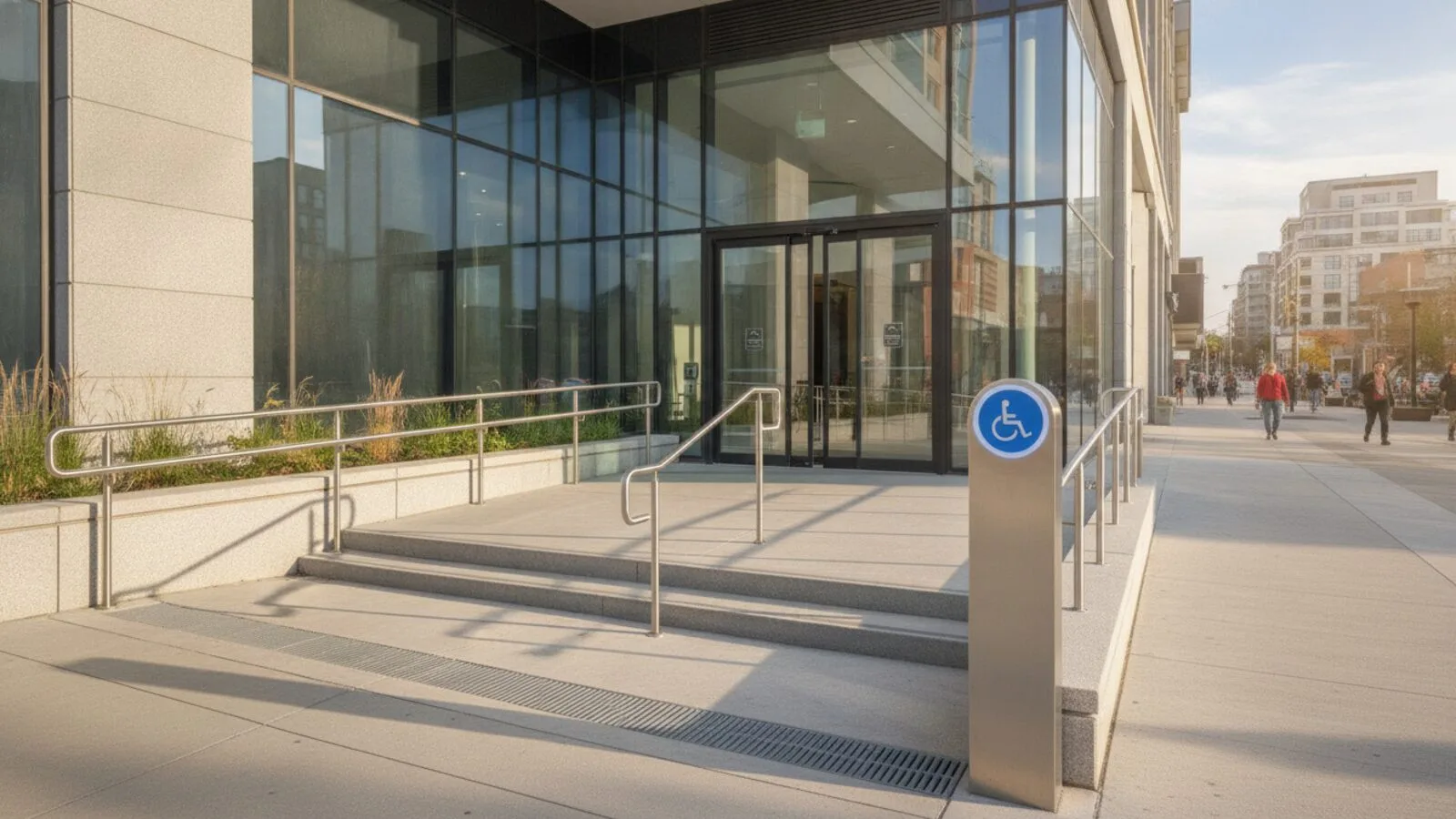
Regular service protects three things: safety, compliance and budget. A door that no longer reverses on an obstruction is a genuine injury risk and a liability exposure. Keeping accessible entrances working is also part of operating an inclusive, code-aware business in Ontario — our overview of accessibility requirements for Ontario businesses explains why a functioning powered entrance matters. And financially, planned maintenance is almost always cheaper than emergency repairs and the downtime, lost sales and rush-fee parts that come with them. If you are weighing the cost of upkeep against replacing an ageing unit, see our guide on repair vs. replacement.
We provide scheduled maintenance plans for businesses across Toronto and the GTA. Get in touch to set up a service interval that matches how hard your doors actually work.
Frequently asked questions
Is an annual automatic door inspection legally required in Ontario?
The annual inspection by an AAADM-certified technician is the strong recommendation of the ANSI/BHMA A156.10 safety standard rather than a provincial statute, but keeping doors safe and accessible ties into both your duty of care and Ontario accessibility expectations. In practice, owners and insurers treat the annual certified inspection as the standard of care.
How do I know if my door needs more frequent service?
Count the traffic and look at the environment. Doors that cycle constantly, sit on a salted exterior threshold, or serve healthcare and transit settings wear faster and benefit from quarterly or semi-annual visits. If you are already seeing recurring faults, that is a sign the interval is too long.
What is the difference between a daily check and a professional inspection?
The daily check is a quick, no-tools walk-through your own staff perform to catch obvious safety issues. The professional inspection is a full diagnostic and adjustment by a certified technician, who tests forces and sensors, services mechanical parts, and certifies the door against the safety standard.
Door trouble, or planning an upgrade?
Talk to a technician about same-day service and upfront quotes across Toronto & the Greater Toronto Area.